
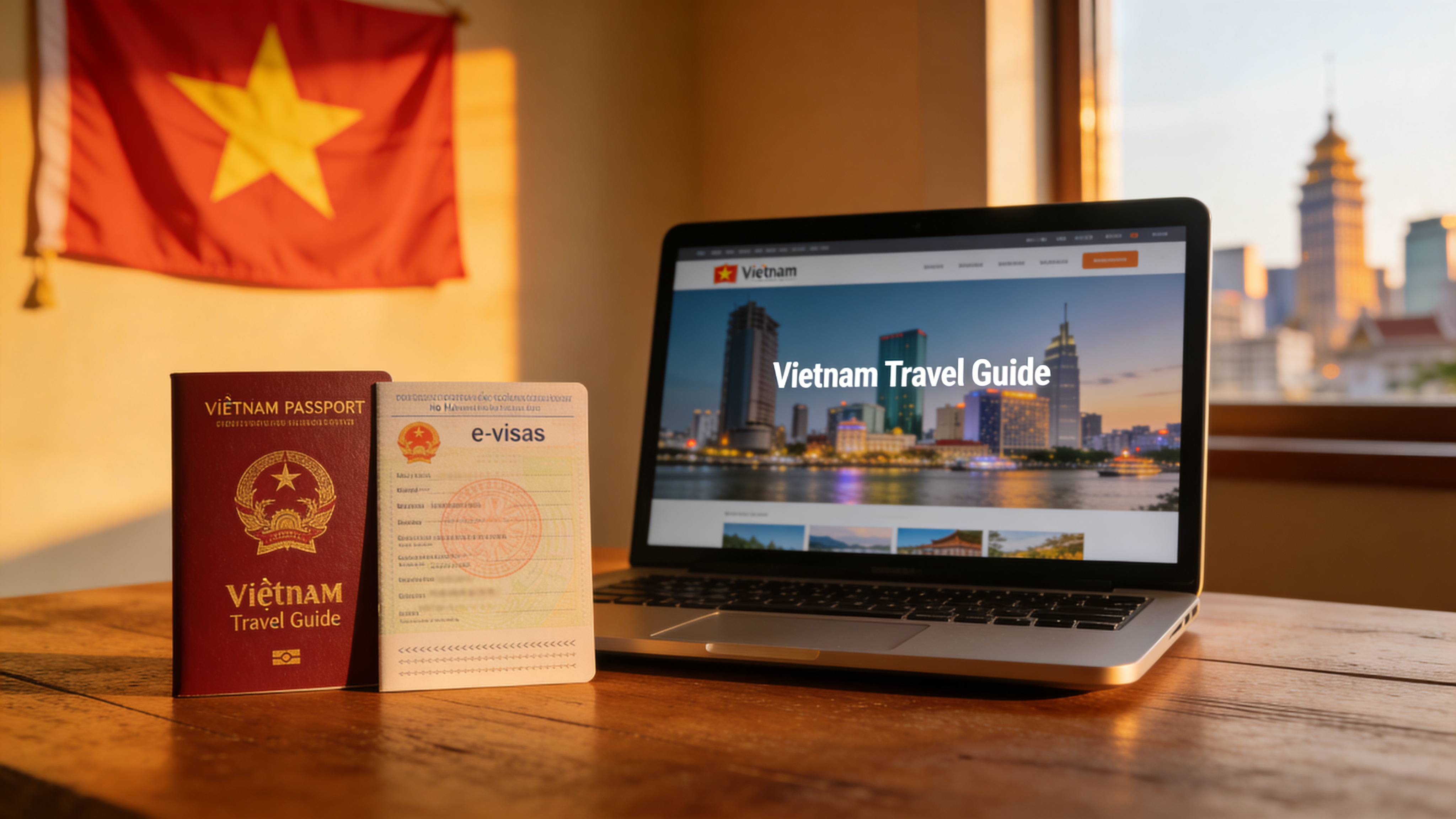
Vietnam's visa system was significantly simplified in 2023 and updated again in 2025. Here is the current landscape as of May 2026:
| Visa Type | Cost | Duration | Best For | Status |
|---|---|---|---|---|
| E-visa (multiple entry) | $50 | 90 days | Most digital nomads | ✅ Active, recommended |
| E-visa (single entry) | $25 | 90 days | One-trip visitors | ✅ Active |
| Visa exemption | Free | 14-45 days | Short stays only | ✅ Active (select countries) |
| Business visa (DN) | $25-100 | Up to 1 year | Business travelers with sponsor | ✅ Active but requires sponsor |
| Talent visa | Varies | Up to 5 years | Executives and academics | ✅ Active but most won't qualify |
| Golden Visa (10-year) | N/A | N/A | N/A | ❌ Still a proposal, no timeline |
| Digital nomad visa | N/A | N/A | N/A | ❌ Does not exist yet |
Vietnam's e-visa is straightforward, affordable, and covers virtually every entry point you would realistically use as a nomad. Here is everything you need to know:
| Detail | Info |
|---|---|
| Cost (single entry) | $25 USD |
| Cost (multiple entry) | $50 USD, always get this one |
| Validity | 90 days from date of entry |
| Processing time | 3 business days (standard) |
| Entry points covered | 83 airports, land borders, and seaports (expanded Dec 2025 via Resolution 389) |
| Eligible nationalities | All countries and territories |
| Official portal | evisa.gov.vn |
| Passport validity required | At least 6 months beyond intended stay |
Navigate to evisa.gov.vn, this is the only official Vietnamese government e-visa portal. Do not use third-party sites unless you specifically want an agent service (more on that below). The government portal is free of extra fees and processes the same as any agent.
Choose "E-Visa for Foreigners." Then select Multiple Entry ($50) unless you are absolutely certain you will never leave Vietnam during your stay. Select your intended entry and exit dates, you have 90 days from entry, not from the application date.
Personal information, passport details, intended entry point (select the airport or border crossing you will use), and purpose of visit (Tourism is fine for nomads). Double-check every field, errors on the e-visa application are the most common cause of rejection and delays.
You need a scanned photo of your passport bio page (clear, no glare, all text readable) and a recent passport-style photo of yourself. Both need to be under 2MB. JPEG format works best. Blurry or cut-off passport scans are a frequent rejection reason.
$50 for multiple entry, payable by Visa, Mastercard, or JCB. The payment is processed through the Vietnamese government payment system. If your card declines, try a different card or use Wise virtual card. The fee is non-refundable regardless of outcome.
Standard processing is 3 business days. Apply at least 5-7 days before travel to give yourself buffer. Weekends and Vietnamese public holidays do not count as business days. You can check your application status at evisa.gov.vn using your registration email and date of birth.
When approved, download your e-visa PDF and print a physical copy. Most Vietnamese immigration officers still want to see a printed copy even though the visa is electronic. Do not rely on showing it on your phone screen. Print two copies just in case.
The official government portal is always your first option. It is free of agency fees and processes identically to any third-party service. However, some nomads prefer using an agent for the added support, especially on first applications or when applying close to travel dates.
Vietnam's major airports, particularly Tan Son Nhat in HCMC and Noi Bai in Hanoi, are genuinely busy. Immigration queues of 60-120 minutes are normal during peak evening arrivals when multiple international long-haul flights land at the same time. After a 15-24 hour journey from North America, Europe, or Australia, standing in a packed immigration hall for two hours is a miserable way to start your Vietnam stint.
Fast track services cut that wait to 10-30 minutes. A dedicated agent meets you at the gate or aircraft sleeve with your name on a sign, escorts you through priority immigration lanes, and handles the paperwork. For $25-55 per person it is one of the most sensible travel investments you can make when entering Vietnam.
Book fast track in advance, ideally at least 48 hours before your flight. Same-day bookings are sometimes possible but not guaranteed. Use one of these trusted services:
You will need to provide your flight number, arrival date, passport details, and number of passengers when booking. Confirmation comes by email.
Resolution 389, enacted December 2025, expanded Vietnam's authorized e-visa entry points to 83 locations including all major international airports, 16 land borders, and 13 seaports. For most nomads flying in, the relevant airports are:
| Airport | City | Code | Fast Track Available |
|---|---|---|---|
| Tan Son Nhat International | Ho Chi Minh City | SGN | Yes |
| Noi Bai International | Hanoi | HAN | Yes |
| Da Nang International | Da Nang | DAD | Yes |
| Cam Ranh International | Nha Trang | CXR | Limited |
| Phu Quoc International | Phu Quoc Island | PQC | Limited |
This is the question every nomad asks and nobody gives a straight answer on. Here is the honest situation as of May 2026:
Working remotely for a foreign company while in Vietnam on an e-visa is technically unauthorized but widely tolerated. Vietnam's labor law defines "work" as employment activities within Vietnam for Vietnamese entities. Remote work for a company headquartered and operating outside Vietnam occupies a gray area that Vietnamese immigration does not actively enforce against.
In practice, thousands of digital nomads work remotely from Vietnam every month without issue. Immigration officers at the border are not checking your laptop or asking about your work setup. The risk is theoretical rather than practical for the vast majority of nomads.
If you want complete legal clarity, the business visa (DN type) is the closest option, but it requires a Vietnamese sponsor which is not practical for most independent nomads. The reality is that the e-visa is what the nomad community uses and it works.
The e-visa gives you 90 days. After that you need to leave Vietnam and re-enter on a new e-visa. Here are your realistic options for extending your stay:
The most common approach. Leave Vietnam, cross a land border or take a short flight to Cambodia, Thailand, or Laos, and re-enter on a fresh e-visa. Many nomads do a quick overnight to Phnom Penh or a weekend in Bangkok. You can apply for the new e-visa before your current one expires so there is no gap. Budget $100-200 for a basic Cambodia or Thailand trip to reset your 90 days.
You can apply for a new e-visa while your current one is still valid. Apply about 2 weeks before expiry, leave Vietnam on the last day of your current visa, and re-enter immediately on the new one. Some nomads make a same-day trip to a land border, cross, and come straight back.
If you have a connection to a Vietnamese company or organization that can act as a sponsor, a business visa allows stays of up to 1 year with multiple entries. This is not practical for most independent nomads but worth knowing if you have local business connections.
Does not exist in Vietnam as of May 2026. There has been discussion at the government level about creating a dedicated remote work visa but no legislation has been introduced. Do not count on it when planning. The e-visa is your tool.
Launched in 2025, the talent visa allows stays of up to 90 days per entry over a 5-year period for recognized specialists. The eligibility bar is genuinely high, targeting academics with recognized international credentials, executives of major companies, and specialists in fields where Vietnam has formally identified talent shortages. The vast majority of digital nomads will not qualify. Do not waste time applying unless you have verifiable credentials in the target categories.
Still a proposal as of May 2026. Vietnamese state media has reported on the concept, and immigration consultancies like Henley and Partners have discussed it, but there is no enacted legislation, no application portal, and no official timeline. Experts have suggested the rollout may be significantly delayed. Do not factor this into any near-term visa strategy.
The $50 e-visa fee is charged in USD. Wise gives you real exchange rates with no hidden conversion markup on card payments. Set it up before you apply.
Get Wise Free →Join the newsletter and get our free Southeast Asia Nomad Starter Kit: costs, visas, money, and the tools that actually matter. Plus on-the-ground updates as things change.
From $56/month. Covers Vietnam and 180+ countries. Can be purchased after you have already left home. Medical evacuation included.
Get SafetyWing →