
Bali has been the spiritual home of the digital nomad movement for over a decade, and for good reason. You get a low cost of living, a deep community, fast internet, world-class surf, and a culture that is genuinely unlike anywhere else in Southeast Asia. Canggu and Ubud alone support thousands of remote workers at any given moment.
But 2026 is a turning point. Indonesia has decided it wants quality long-term visitors on the correct visas, not a rotating crowd working quietly on tourist stamps. That makes this the most important year in a while to understand the rules before you book. Get them right and Bali is as good as it has ever been. Get them wrong and you risk deportation and a multi-year ban. So we start with visas.
Here is the honest state of play as of mid-2026. Indonesia has both created clearer legal pathways for nomads and dramatically increased enforcement against people using the wrong ones.
The Visa on Arrival (VoA) gives you 30 days, extendable once for another 30, so 60 days maximum, for around $35. If you need longer, the C1 Visit Visa (formerly the B211A) gives 60 days and can be extended twice, up to 180 days total without leaving, usually $150 to $300 through an agent. Both are strictly for tourism and personal visits. Neither permits work, commercial activity, or content creation for any benefit.
This is the legal long-stay route for remote workers. It grants up to one year of residency and is renewable. The catch is the requirements: you must show proof of at least $60,000 USD in annual income, and your work must be for companies or clients based outside Indonesia. You cannot earn from local Indonesian businesses on it. If you work remotely for overseas clients and clear the income bar, this is your visa.
Indonesia created the C5A Social Media Content Creator Visa specifically for influencers and creators doing short-term commercial work. It allows 60 days plus two 60-day extensions, up to 180 days total. If your income depends on producing content in Bali, this is the compliant path rather than a tourist stamp.
Join the newsletter and get our free Southeast Asia Nomad Starter Kit: costs, visas, money, and the tools that actually matter. Plus on-the-ground updates as the rules change.
Bali is affordable but not the cheapest place in Southeast Asia anymore. Canggu in particular has crept up as it has gentrified. Here is a realistic monthly picture for a single nomad.
| Monthly cost | Budget | Comfortable |
|---|---|---|
| Villa or apartment | $400 to $600 | $700 to $1,200 |
| Coworking hot desk | $90 to $130 | $130 to $180 |
| Scooter rental | $60 to $90 | $60 to $90 |
| Food (mix of local and cafes) | $250 to $400 | $400 to $700 |
| Monthly total | $900 to $1,200 | $1,400 to $2,200 |
You can live in Ubud or the quieter east for less than Canggu, where beach-club culture and imported tastes push spending up fast. A full cost breakdown by neighbourhood is coming in the dedicated cost of living guide.
Bali is not one place, and picking the wrong area is the most common first mistake. The short version: Canggu for the social scene, surf, and cafe-working, Ubud for a slower, greener, more wellness-focused pace inland, Uluwatu for world-class surf and clifftop luxury with less density, and Sanur for a calmer, more family-friendly and affordable base on the east coast. Each has a very different feel, and I break them down properly in the neighbourhoods guide.
Internet in the main hubs is genuinely good. Fibre in a decent villa handles calls and uploads without drama, and Bali has one of the deepest coworking scenes in the region, from Dojo and Tropical Nomad in Canggu to Outpost and Hubud-style spaces in Ubud. A local SIM or eSIM as backup is essential for when villa wifi wobbles. The coworking and SIM guides go deeper on specific spaces and providers.
This is where NomadAgent goes further than the usual Canggu listicles. Bali is the gateway, not the whole story. Indonesia has more than 17,000 islands, and some of the best experiences are a short boat or flight away. Here is what is worth your time.
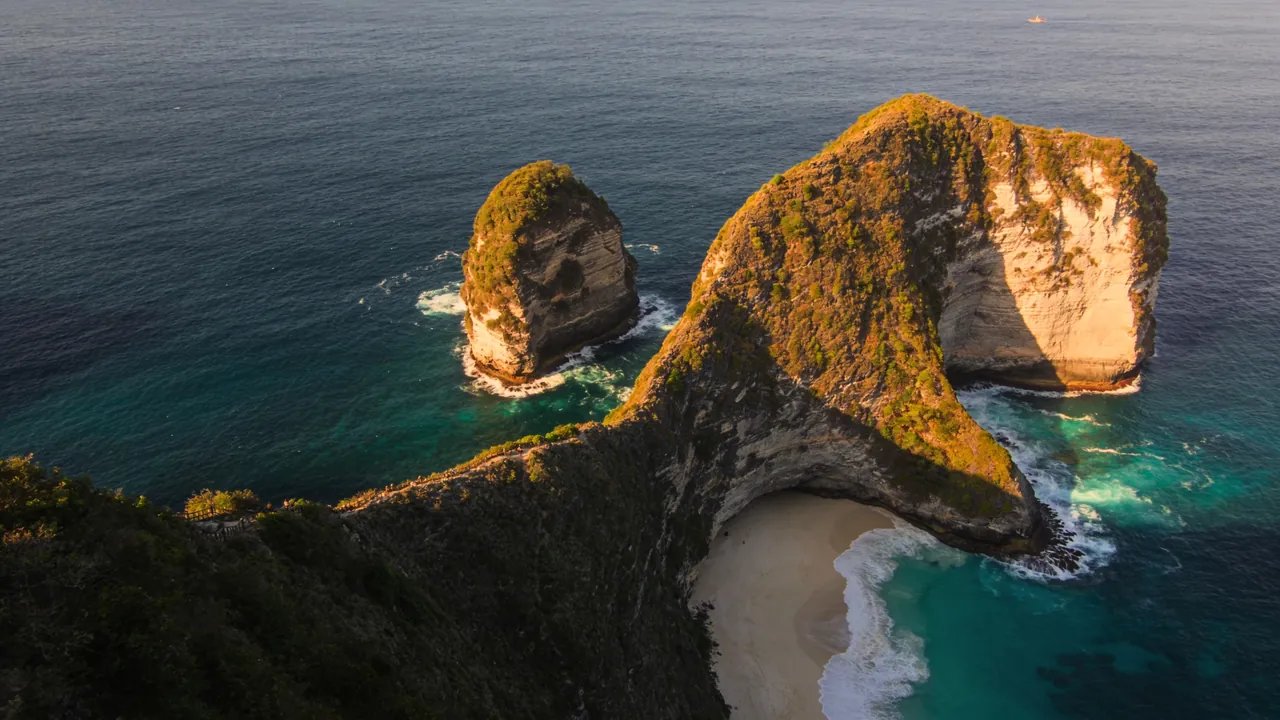
Nusa Penida, Lembongan, and Ceningan sit just off Bali's southeast coast. Penida delivers the dramatic cliffs and Kelingking viewpoint, while Lembongan and Ceningan are quieter, slower, and perfect for a working week away from the Canggu buzz. The Gili Islands and Lombok are the next step out: cheaper than Bali, calmer, with superb diving and surf, and Lombok in particular is an underrated longer-stay base.
Push further and it gets special. Komodo National Park and Labuan Bajo on Flores are the launch point for liveaboard boat trips, the dragons, and some of the best diving in Asia. Flores itself, with the tri-coloured Kelimutu crater lakes, rewards anyone willing to go off the beaten path. And Java, the main island most nomads fly over, holds Yogyakarta's culture and the volcano country of Bromo and Ijen. Each of these gets its own full guide in this series, so you can plan real trips, not just day-tour bookings.
I would not be doing my job if I only sold you the postcard. Bali has real friction: traffic in Canggu and the south has become genuinely bad, tourist-area prices keep climbing, plastic and overtourism are visible problems, scooter accidents are the number one way nomads end up in hospital, and the 2026 visa enforcement has made the old casual approach risky. None of this is a reason to skip Bali. It is a reason to go in prepared, insured, and on the right visa.
From $56/month, covers Indonesia plus 180+ countries, and can be bought after you have already left home. Built for nomads, including scooter and adventure cover.
Get SafetyWing →This overview is the hub. Over the coming weeks the full series builds out underneath it, money and logistics first, then the islands and Java. Here is what is landing.
Every visa, step by step, and how to stay compliant.
Real monthly budgets by neighbourhood.
Canggu vs Ubud vs Uluwatu vs Sanur.
The spaces worth your money.
The quieter escape off Bali's coast.
Cheaper, calmer, underrated.
Dragons, diving, and boat trips.
Java's culture and volcano country.