 NOMADAGENT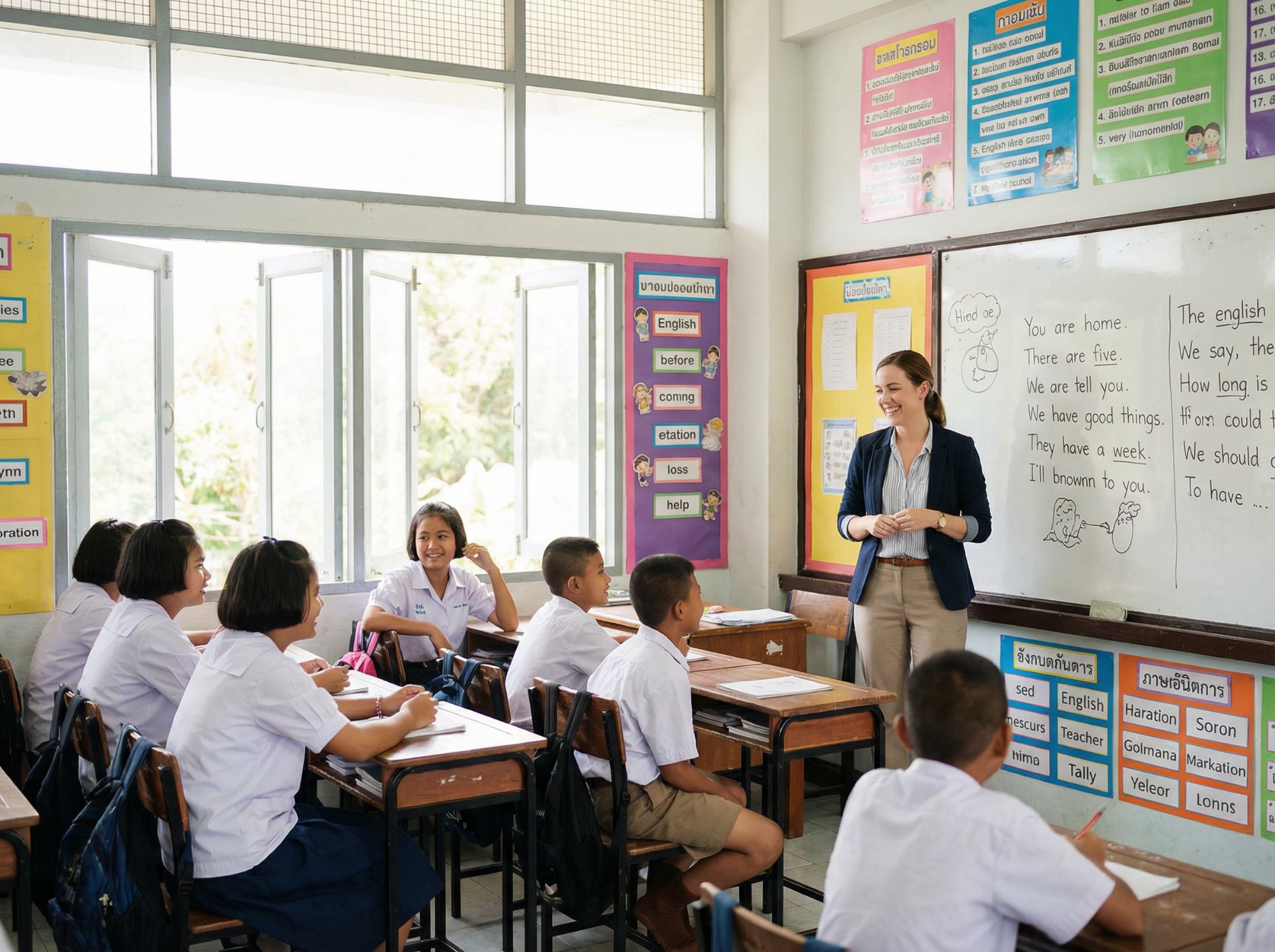
Thailand remains one of the most popular destinations in the world for TEFL teachers, and for good reason. English is a compulsory subject starting from elementary school, nearly 30% of the population is under 30, and the country consistently ranks low in English proficiency — meaning demand for foreign English teachers is strong and ongoing.
But let's be real: the salary won't make you rich. Thailand isn't South Korea or the Middle East in terms of pay. What it offers instead is quality of life — incredible food for $2-5 per meal, warm weather year-round, a low cost of living, a welcoming culture, and access to the rest of Southeast Asia for weekend travel.
I've been teaching in Thailand and Southeast Asia for 9 years. I started with TEFL in Chiang Mai, taught in China, and came back to Bangkok where I now teach kindergarten at a Montessori school. Everything in this guide comes from first-hand experience and verified 2026 data — not recycled information from 2019 blogs.
To teach English legally in Thailand in 2026, you need the following:
1. Bachelor's degree — In any field. This is non-negotiable for a legal work permit. It doesn't need to be in education — English, business, science, anything works. Your degree must be notarized and legalized (apostilled) for the visa process.
2. TEFL/TESOL certificate (120 hours minimum) — While not technically a legal requirement for the visa, virtually every reputable school requires one. In-person TEFL courses are increasingly preferred over online-only courses. If you don't have one yet, you can do an in-person course in Bangkok or Chiang Mai before job hunting.
3. Clean criminal background check — A police clearance from your home country, typically FBI check for Americans, DBS for UK citizens, or equivalent. This must be recent (usually within 6 months) and apostilled.
4. Native English speaker (preferred) — Schools prefer passport holders from the US, UK, Canada, Australia, Ireland, New Zealand, or South Africa. Non-native speakers can absolutely teach in Thailand with a TOEIC score of 600+ or IELTS 5.5+.
5. Passport with 6+ months validity — Standard requirement for the visa and work permit process.

Not all teaching jobs in Thailand are the same. The type of school dramatically affects your salary, workload, and experience.
Thai government schools are where most first-time TEFL teachers land. Classes are large (30-50 students), resources are basic, and you'll likely be the only foreign teacher at the school. The upside: you'll be deeply immersed in Thai culture, often in smaller towns where the cost of living is very low. Schools typically provide or help arrange housing.
Private schools running English Programs (EP) or Mini English Programs (MEP) offer better pay, smaller classes, and more resources. You'll usually teach core subjects like math, science, or social studies — in English. These positions are a significant step up from government schools and are great for building a resume toward better-paying roles.
Language centers like Wall Street English, ECC, or AUA operate differently from schools. You teach conversational English to adults and children, often in evening or weekend hours. Pay is usually per teaching hour, and schedules can be irregular. The advantage: no lesson planning for Thai curriculum, more flexibility, and often located in city centers.
Private tutoring is where the real money is per hour — but it takes time to build a client base. Most tutors find students through word of mouth, expat communities, and social media. This is typically supplemental income alongside a school position.
These numbers are based on verified 2026 data, teacher reports, and placement agency figures. Salaries have risen approximately 5-10% since 2025 due to demand and inflation.
| School Type | Monthly Salary (THB) | Monthly Salary (USD) |
|---|---|---|
| Government schools | 25,000 - 35,000 | $735 - $1,030 |
| Private bilingual schools | 35,000 - 60,000 | $1,030 - $1,765 |
| Language centers | 35,000 - 50,000 | $1,030 - $1,470 |
| Private tutoring | Per hour: 300 - 800 THB | $8.80 - $23.50/hr |
| Specialist tutoring (IELTS/TOEIC/Business) | Per hour: 600 - 1,500+ THB | $17.65 - $44+/hr |
Where you teach matters as much as what type of school you teach at. Bangkok and Phuket pay the most but cost the most. Rural areas pay less but your money stretches much further.
| Region | Typical Range (THB/mo) | Cost of Living | Savings Potential |
|---|---|---|---|
| Bangkok | 35,000 - 60,000+ | Higher ($1,200-2,000/mo) | Moderate |
| Phuket / Resort areas | 35,000 - 55,000 | Higher (tourist pricing) | Low-Moderate |
| Chiang Mai | 30,000 - 45,000 | Low ($800-1,200/mo) | Good |
| Rural / Isaan / Sukhothai | 25,000 - 42,000 | Very low ($500-800/mo) | Excellent |
The common pattern: teachers who want to save money go rural. A teacher earning 35,000-42,000 THB in a town like Sukhothai, where rent might be 3,000-5,000 THB/month and meals cost 30-50 THB, can save 15,000-25,000 THB/month ($440-735). That same salary in Bangkok leaves almost nothing after rent and living costs.
Once you're established and have a work permit, private tutoring is where you can significantly boost your income. Standard rates in Bangkok:
Most tutors find clients through school referrals (parents of your students), expat Facebook groups, word of mouth, and platforms like Preply or iTalki. Building a reputation takes 3-6 months, but established tutors with 10-15 hours per week of private lessons can earn an additional 15,000-30,000 THB/month on top of their school salary.
Yes — but it depends entirely on where you live and how you live.
| Expense | Monthly (THB) |
|---|---|
| Rent (studio, On Nut area) | 8,000 - 10,000 |
| Food (mix of street food + cooking) | 8,000 - 10,000 |
| Transport (BTS + occasional Grab) | 2,500 - 3,500 |
| Utilities + Internet + SIM | 2,000 - 3,000 |
| Social / entertainment | 3,000 - 5,000 |
| Insurance (SafetyWing) | 1,500 |
| Total | 25,000 - 33,000 |
| Savings | 7,000 - 15,000 ($206-441) |
| Expense | Monthly (THB) |
|---|---|
| Rent (1BR apartment or school housing) | 3,000 - 6,000 |
| Food (mostly local) | 5,000 - 7,000 |
| Transport (scooter rental) | 2,500 - 3,500 |
| Utilities + Internet + SIM | 1,500 - 2,500 |
| Social / entertainment | 2,000 - 3,000 |
| Total | 14,000 - 22,000 |
| Savings | 13,000 - 21,000 ($382-618) |
The takeaway: you probably won't build serious wealth teaching TEFL in Thailand. But you can live comfortably, travel the region on weekends, and save a few hundred dollars per month — all while gaining international teaching experience and living in one of the best countries in the world.
My paid guide includes detailed monthly budgets for Bangkok, Chiang Mai, Bali, Vietnam, and the Philippines — including teaching-specific scenarios. Plus coworking spaces, healthcare comparisons, and visa strategies.
Get the Guide — $9.99 →There are several reliable channels for finding TEFL positions in Thailand:
Agencies like KET (Kids English Thailand), Essential TEFL, and others connect teachers with schools and handle much of the visa/permit paperwork. Many charge zero placement fees — the school pays them. This is the easiest route for first-time teachers who don't want to navigate the bureaucracy alone.
Walk into schools with your CV. This works better than you might think, especially in Bangkok and Chiang Mai. Schools lose teachers mid-contract more often than you'd expect, and being physically present gives you a huge advantage over email applicants.
Many TEFL providers (like Essential TEFL in Bangkok or SEE TEFL in Chiang Mai) include job placement assistance as part of their course. You finish your 4-week TEFL, and they connect you with partner schools. This is how a lot of teachers start.
Thailand's school year is different from Western countries. Understanding the calendar is essential for timing your job search.
| Period | What's Happening |
|---|---|
| February - April | Peak hiring for Term 1 (May start). Best selection of positions. Apply now. |
| May - October | Term 1 in session. Some mid-term vacancies. |
| September - October | Hiring for Term 2 (November start). Smaller hiring wave. |
| November - March | Term 2 in session. Limited openings. |
| Year-round | Language centers hire continuously regardless of school calendar. |
After 9 years in this industry, here's what actually matters in an interview:
Energy and enthusiasm matter more than credentials. Thai schools hire personalities, not resumes. They want someone who will engage with students, participate in school events, and represent the school well. Show up well-dressed, smile, and demonstrate genuine interest in their students.
Demo lessons are common. Many schools will ask you to teach a 15-30 minute demonstration lesson as part of the interview. Prepare something interactive and age-appropriate. Use props, movement, and student participation. Standing and lecturing is the fastest way to lose a demo lesson in Thailand.
Appearance matters.
This is Thailand — professional dress is expected. Men should wear a collared shirt and trousers (not shorts). Women should dress conservatively. Tattoos should be covered for the interview. This isn't about personal expression; it's about cultural expectations in Thai education.Flexibility is valued. Schools want teachers who can adapt. You might be asked to teach subjects outside English (basic math, science, PE). Saying "yes" to these requests — especially at government and private schools — makes you far more valuable and employable.
A typical day teaching at a Thai school:
Thai schools start early. Students line up for the national anthem, Buddhist prayers, and school announcements. You're expected to be present. Dress code is strict — most schools require formal attire or a school polo shirt.
You'll typically teach 4-6 periods per day, each 50 minutes. Government school classes can be 30-50 students. Private school classes are usually 15-30. Expect mixed ability levels — some students will understand you perfectly, others will know almost no English.
Most schools have a canteen with Thai food for 30-50 THB per meal. This is where you'll bond with Thai colleagues. Learn basic Thai phrases — it goes a very long way with your co-workers.
More teaching periods. Energy drops after lunch, especially with younger students. This is where interactive activities, games, and movement-based lessons make the biggest difference.
Students are dismissed. Some schools require you to stay for planning or meetings. Others are relaxed about leaving once classes are done. Teaching hours are typically 18-25 per week, with the rest being planning time.
Start humble, move up fast. Your first teaching job in Thailand probably won't be glamorous. It might be a government school in a rural town earning 30,000 THB. That's fine. Use that year to build classroom experience, learn Thai culture, understand how the education system works, and get your paperwork sorted. Then leverage that experience into a better-paying position at a private school or in Bangkok.
Learn some Thai. Even basic conversational Thai transforms your experience. Your co-teachers will respect you more, your students will love it, and navigating the bureaucracy (immigration, banks, landlords) becomes dramatically easier. Thai language schools are cheap — 5,000-10,000 THB for a multi-week course.
Do the Khurusapha 7 modules early. Most teachers put off the teaching license requirements and then panic when their temporary permit is about to expire. Start the 7-module TPDI training as soon as you can — it takes time, and completing all 7 modules (420 hours total, at 3,200 THB per module) is required for the P-License. You can do them in any order, so pick whatever fits your schedule. If you've completed at least 4 modules, Khurusapha offers a P-License extension that bypasses the normal 3-waiver cap — a lifeline for teachers who started late. I cover the entire license pathway in Part 2 of this guide.
Build a life, not just a job. The teachers who thrive in Thailand are the ones who integrate — join a Muay Thai gym, cook Thai food, make Thai friends, explore provinces tourists never see. The ones who burn out are the ones who only hang out with other expats and treat it as a temporary adventure. Thailand rewards people who commit to it.
Get your legal paperwork right from day one. Work permit, visa, 90-day reporting, teaching license — these aren't optional. I've seen teachers get deported, fined, and blacklisted for cutting corners on paperwork. It's not worth the risk. The full legal process is covered in detail in Part 2.
Teaching is one of the best ways to start life in Southeast Asia. My 34-page guide covers everything — teaching salaries across 5 countries, banking, healthcare, coworking, monthly budgets, and visa strategies. Plus 3 bonus resources.
Get the Guide — $9.99 →📚 Related NomadAgent Guides
Part 2: Work Permits, Visas & Khurusapha 7 Modules
How to Open a Thai Bank Account in 2026
How to Rent an Apartment in Bangkok 2026
🎯 Explore Thailand Activities & Tours