
 NOMADAGENT
I've lived in Bangkok for 6 years. In that time I've been to government hospitals, private hospitals, walked into pharmacies for antibiotics you'd need a prescription for back home, and watched friends get hit with $5,000+ hospital bills they weren't prepared for. Thailand's healthcare is genuinely excellent, but the system works differently than what most Westerners expect, and the price difference between your options is massive.
This guide covers everything: the hospital types, real costs, insurance providers compared, and exactly which option makes sense for your situation.
I know what you're thinking: "Healthcare in Thailand is cheap, I'll just pay out of pocket." And for a lot of minor stuff, that works. A doctor visit at a clinic runs $10-30. Antibiotics from a pharmacy cost $3-5. But here's the reality that catches people off guard:
Motorbike accidents are the #1 cause of tourist hospitalizations in Thailand. If you're riding a scooter in Bangkok or on the islands (and you probably will), this isn't theoretical. Thailand's roads are among the most dangerous in the world. Thai private hospitals typically require payment upfront or a credit card hold before they'll treat you for non-emergency care. With insurance, you get direct billing, meaning the hospital charges the insurer directly and you walk out without paying.
Insurance costs $1-5 per day depending on the plan. A single ER visit costs more than a year of budget insurance. The math is simple.
Thailand runs a dual healthcare system: government (public) hospitals and private hospitals. Both are available to foreigners, but the experience and cost are dramatically different.
Thai citizens get free or heavily subsidized care at government hospitals through the Universal Coverage Scheme. Foreigners pay out of pocket at both government and private hospitals, unless you have a Thai work permit and pay into Social Security, in which case government hospital care is free.
Thailand has 59 JCI-accredited hospitals, which is more than Italy, Japan, or Israel. The country is a global medical tourism destination with over 3.5 million medical tourists per year. The quality of care, especially at top Bangkok hospitals, is genuinely world-class. Many doctors trained in the US, UK, or Australia before returning to practice in Thailand.
This is the part most nomad guides skip entirely, and it's a mistake. Government hospitals in Thailand, especially the major teaching hospitals in Bangkok, have some of the best doctors and equipment in the country. Many top specialists at private hospitals actually trained at these government institutions.
Thailand's oldest and largest hospital. Founded in 1888, it's the primary teaching hospital for Mahidol University (Thailand's top medical school) with over 2,200 beds and 61 specialty clinics. This is where Thai royalty have been treated. It handles over 3 million outpatients annually and is considered the best hospital in Thailand by many Thais.
Location: Chao Phraya River, Bangkok Noi (accessible by ferry from Siriraj Pier)
Pros: Best specialists in Thailand, latest equipment, teaching hospital prestige, 70-80% cheaper than private hospitals.
Cons: Very long wait times (4-8 hours common), limited English outside specialty clinics, crowded, basic amenities.
Affiliated with Chulalongkorn University (Thailand's top-ranked university) and the Thai Red Cross Society. 1,435 beds, renowned cancer center, cardiology department, and transplant unit. Conveniently located next to MRT Sam Yan station in the heart of Bangkok.
Location: Rama 4 Road, Pathum Wan (MRT Sam Yan)
Pros: Excellent doctors, central location, strong for cancer and cardiac care, much cheaper than private.
Cons: Same wait time and language issues as Siriraj.
Another Mahidol University teaching hospital, located near Victory Monument. Known for neurology, nephrology, pediatrics, oncology, and one of Thailand's best neonatal intensive care units. Handles about 5,000 outpatients daily.
Location: Rama 6 Road, near Victory Monument
Pros: Top-tier specialists, strong research focus, cheaper than private.
Cons: Extremely crowded, long waits, limited English.
The honest take on government hospitals for nomads: They're a viable option if you speak some Thai (or bring a Thai friend), don't mind waiting 4-8 hours, and want to save serious money. The doctors are excellent, often better than what you'll find at mid-tier private hospitals. But for most Western nomads who don't speak Thai and want efficiency, private hospitals or the "special clinics" at government hospitals are more practical for anything beyond basic care.
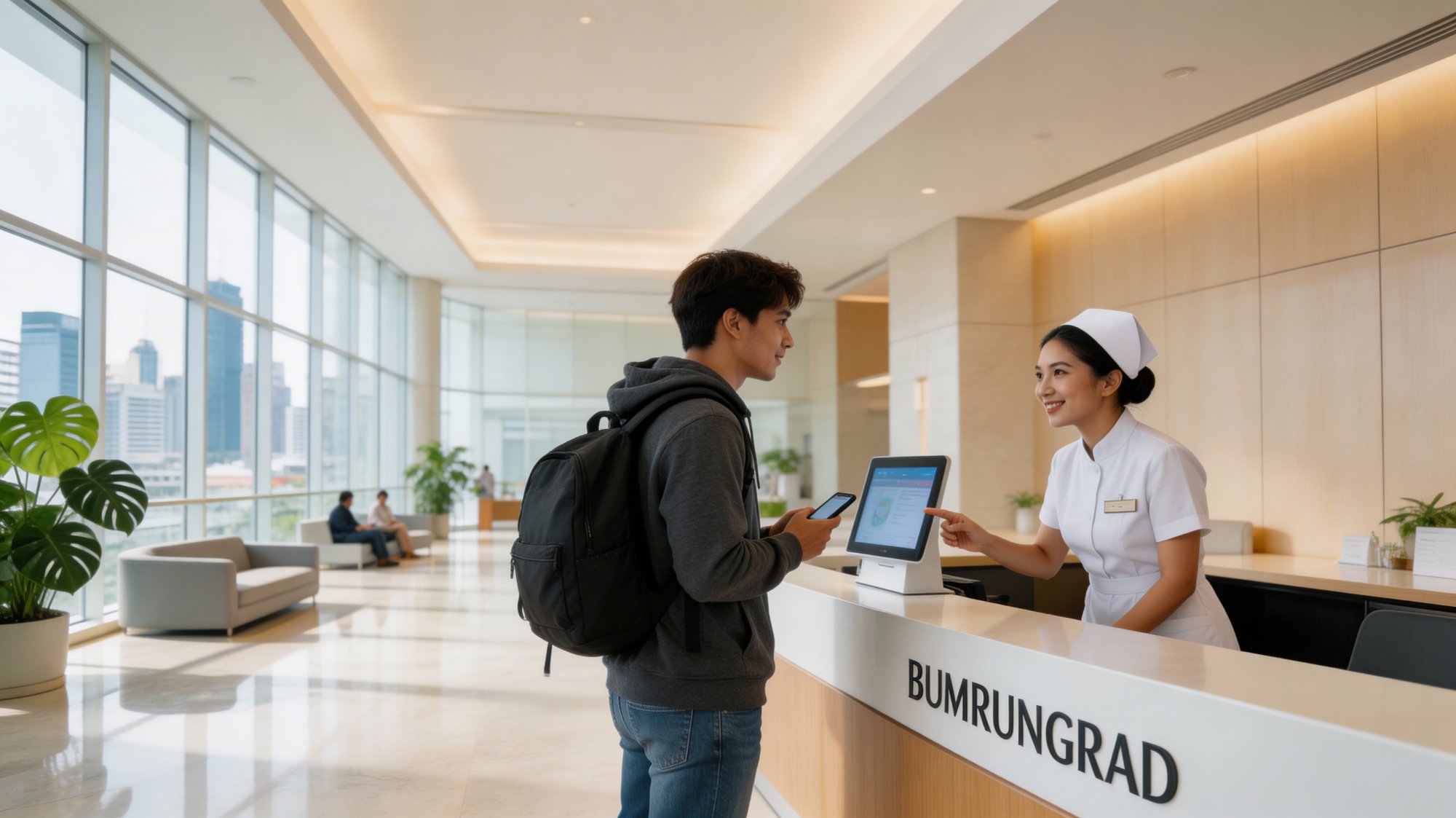
This is what Thailand is famous for. Private hospitals that feel like five-star hotels with marble lobbies, flat-screen TVs in every room, English-speaking concierge staff, and 15-minute wait times.
Asia's largest private international hospital. Treats over 500,000 foreign patients annually. The gold standard for medical tourism in Thailand. Virtually every doctor speaks fluent English. JCI-accredited since 2002 (first in Asia). If you have good insurance, this is where you want to be for anything serious.
Cost level: $$$$$ (most expensive in Thailand)
Part of the Bangkok Dusit Medical Services group, the largest private hospital operator in Thailand. Strong for cardiac care, stroke, and general surgery. Multiple locations across Thailand, which is useful if you're outside Bangkok.
Cost level: $$$$ (slightly less than Bumrungrad)
Popular with expat families. Strong pediatrics, good international patient department. Locations in Sukhumvit and Thonburi. Often the choice for long-term expats due to good balance of quality and cost.
Cost level: $$$ (more moderate for a top-tier private hospital)
All major private hospitals in Bangkok accept international insurance and offer direct billing. Show your insurance card, get treated, walk out. No payment required. This alone makes insurance worth having.
Here's what you're actually looking at if you pay out of pocket:
| Treatment | Government Hospital | Private Hospital |
|---|---|---|
| Doctor consultation | 200-500 THB ($6-14) | 800-2,000 THB ($23-57) |
| Blood test (basic panel) | 300-800 THB ($9-23) | 2,000-8,000 THB ($57-230) |
| X-ray | 300-500 THB ($9-14) | 1,500-3,000 THB ($43-86) |
| ER visit (minor) | 1,000-3,000 THB ($29-86) | 5,000-15,000 THB ($143-430) |
| Dengue hospitalization (3-5 nights) | 15,000-30,000 THB ($430-860) | 50,000-175,000 THB ($1,430-5,000) |
| Appendectomy | 40,000-60,000 THB ($1,150-1,720) | 120,000-350,000 THB ($3,430-10,000) |
| Broken leg (surgery + recovery) | 50,000-100,000 THB ($1,430-2,860) | 150,000-500,000 THB ($4,300-14,300) |
| Private room (per night) | 500-1,500 THB ($14-43) | 5,000-20,000 THB ($143-570) |
The price difference between government and private is staggering. A basic blood test that costs $9 at Siriraj can be $230 at Bumrungrad. An appendectomy ranges from $1,150 at a government hospital to $10,000 at a top private hospital. Same surgery, same country, 8x price difference.
| Provider | Monthly Cost (age 30) | Coverage | Best For |
|---|---|---|---|
| SafetyWing Essential | ~$56/4 weeks | $250K max, $250 deductible | Budget nomads, short stays |
| SafetyWing Complete | ~$161/4 weeks | $1.5M max, outpatient + dental | Long-term nomads wanting full coverage |
| Genki Explorer | ~€105/month | Zero deductible, medical-focused | European nomads, medical-only |
| Pacific Cross | $80-200/month | OIC-approved, Thailand-focused | Long-term Thailand residents, visa compliance |
| IMG Global | $100-250/month | Flexible international | Multi-country nomads needing flexibility |
| Cigna Global Silver | $150-250/month | Comprehensive, 200+ countries | Premium coverage, chronic conditions |
| Cigna Global Gold | $250-350/month | Full coverage + preventive care | Families, older nomads, pre-existing conditions |
| World Nomads | ~$166/month | $125K emergency, trip protection | Adventure travelers, short trips |
SafetyWing is the most popular insurance among digital nomads and it shows up in every nomad community. There's a reason for that: it's cheap, flexible, and designed for how nomads actually live.
~$56 / 4 weeks (under 39)
Max coverage: $250,000
Deductible: $250 per certificate period
Covers: 175+ countries, emergency medical, hospital stays, emergency dental, medical evacuation ($100K lifetime)
Doesn't cover: Routine checkups, pre-existing conditions, outpatient beyond emergencies, ongoing prescriptions
How it works: Subscribe anytime (even if already traveling), cancel anytime. Auto-renews every 4 weeks. Claims submitted online, reimbursed within ~10 business days.
~$161 / 4 weeks (under 39)
Max coverage: $1,500,000
Covers: Everything in Essential PLUS outpatient care, routine checkups, screenings, vaccines, dental (up to $1,000/year), mental health, maternity, chronic conditions developed while on the plan
Doesn't cover: Pre-existing conditions, elective procedures, home country care beyond 30 days
The upgrade: If you're staying long-term in Thailand and want actual health insurance (not just emergency coverage), Complete is the tier that makes sense. Routine doctor visits, annual checkups, dental cleanings all covered.
My honest take on SafetyWing: The Essential plan is the minimum viable insurance for healthy nomads under 40. It'll cover the big stuff (motorbike accident, dengue hospitalization, emergency surgery) and the $56/4-week price is hard to argue with. But it's emergency-only coverage. If you want real health insurance with routine care, go Complete. The gap between $56 and $161 is worth it if you're here long-term.
Get: SafetyWing Essential (~$56/4 weeks)
Covers emergencies, hospitalizations, and evacuation. Pay out of pocket for minor stuff (doctor visits are $10-30 at clinics anyway). This is what most young nomads use and it's sufficient for the risk profile.
Get: SafetyWing Complete (~$161/4 weeks) or Cigna Global Silver (~$150-250/month)
If you're basing yourself in Thailand for extended periods, you'll eventually need routine care, dental, or want the peace of mind of comprehensive coverage. SafetyWing Complete is the budget-friendly comprehensive option. Cigna is the premium choice with a massive hospital network including direct billing at Bumrungrad, Bangkok Hospital, and Samitivej.
Get: Pacific Cross ($80-200/month)
Pacific Cross is Thailand-specific, OIC-approved (required for O-A retirement visas), and the best value for people committed to living in Thailand. They accept up to age 75 and coverage is renewable to 99. If Thailand is your base, not just a stop, this is the right choice.
Get: Cigna Global Gold ($250-350/month) or Pacific Cross
Pre-existing conditions complicate everything. Most budget plans exclude them entirely. Cigna and Pacific Cross offer the most options for managing ongoing health needs. More expensive, but the alternative is paying out of pocket for chronic care, which adds up fast.
One of the best things about Thailand's healthcare system for nomads: pharmacies here are incredibly useful. Many medications that require prescriptions in Western countries are available over the counter at Thai pharmacies, often for a fraction of the price.
Antibiotics, anti-inflammatories, allergy medications, basic pain medication, and many other drugs are available without a prescription at most Thai pharmacies. Pharmacists generally speak enough English to help you find what you need, especially in tourist areas. A course of antibiotics might run 100-300 THB ($3-9). Ibuprofen is essentially free by Western standards.
Common pharmacy chains include Boots (yes, the UK chain), Watsons, and countless independent pharmacies. In Bangkok, you're never more than a 5-minute walk from a pharmacy.
Thailand is a major destination for dental tourism, and for good reason. The quality is excellent and the prices are dramatically lower than the West.
| Procedure | Thailand | US (for comparison) |
|---|---|---|
| Dental cleaning | 500-1,500 THB ($14-43) | $75-200 |
| Filling | 800-2,500 THB ($23-72) | $150-300 |
| Crown (ceramic) | 8,000-15,000 THB ($230-430) | $1,000-3,000 |
| Dental implant | 35,000-70,000 THB ($1,000-2,000) | $3,000-6,000 |
| Root canal | 5,000-15,000 THB ($143-430) | $700-1,500 |
Most SafetyWing Essential plans don't cover routine dental. SafetyWing Complete covers up to $1,000/year. But even without insurance, dental care in Thailand is so affordable that many nomads just pay out of pocket for cleanings and basic work. Get a cleaning done while you're here. You'll save money compared to doing it back home.
This is the big one. Motorbike accidents are the #1 reason nomads end up in Thai hospitals. If you're renting a scooter (and almost everyone does), you need insurance that covers motorbike accidents. Check your policy: some plans exclude motorbike injuries if you don't have a valid Thai or international license. SafetyWing covers motorbike accidents.
Bumrungrad is 2-3x more expensive than mid-tier private hospitals like Paolo Hospital or Phyathai. If you're paying out of pocket, you don't need to go to the most expensive hospital in the country for a basic issue. Ask locals or long-term expats for recommendations in your area.
The teaching hospitals (Siriraj, Chulalongkorn, Ramathibodi) have some of the best specialists in Thailand. Private hospitals sometimes refer complex cases to these government institutions because they have equipment and expertise that private hospitals don't. Don't dismiss them because they're "government." The quality of care is often superior for complex medical issues.
In an emergency, the hospital needs your insurance details to set up direct billing. Keep your insurance card (or a screenshot of your policy number and the insurer's emergency phone number) on your phone at all times.
Dengue is real in Thailand, especially during rainy season (June-November). High fever, severe headache, joint pain, and rash are the warning signs. Don't try to tough it out. Dengue can become dangerous fast. Go to a hospital and get a blood test. Early treatment is simple; late treatment is complicated and expensive.
Sign up for SafetyWing (Essential or Complete depending on your stay length and budget). Save your policy number and the emergency contact number on your phone. Download the SafetyWing app. Set up a Wise account so you have a backup payment method in Thailand.
Note the nearest hospital to your accommodation (both government and private). Save their addresses in Google Maps. For Bangkok: Bumrungrad is on Sukhumvit Soi 3, Samitivej on Sukhumvit Soi 49, and Chulalongkorn Hospital is at MRT Sam Yan. For Chiang Mai: Chiang Mai Ram is the main private option; Maharaj Nakorn is the government teaching hospital.
Go to a pharmacy first. Most common ailments (stomach issues, allergies, minor infections, cold/flu) can be handled over the counter for under $10. If the pharmacist says you need a doctor, go to a clinic or hospital.
Call 1669 (Thailand's emergency number) or go directly to the nearest hospital. In a true emergency, any hospital will treat you first and sort out payment later. Thailand's UCEP (Universal Coverage for Emergency Patients) scheme covers the first 72 hours of emergency treatment, though foreigners still receive a bill afterward.
Wise gives you the real mid-market exchange rate for THB. The Wise card works at Thai hospitals and pharmacies, and ATMs nationwide.
Get Wise Card →Health insurance is one of dozens of topics covered in our comprehensive paid guide. Visas, apartments, banking, cost of living, and everything else.
Get the Full Guide - $9.99 →