 NOMADAGENT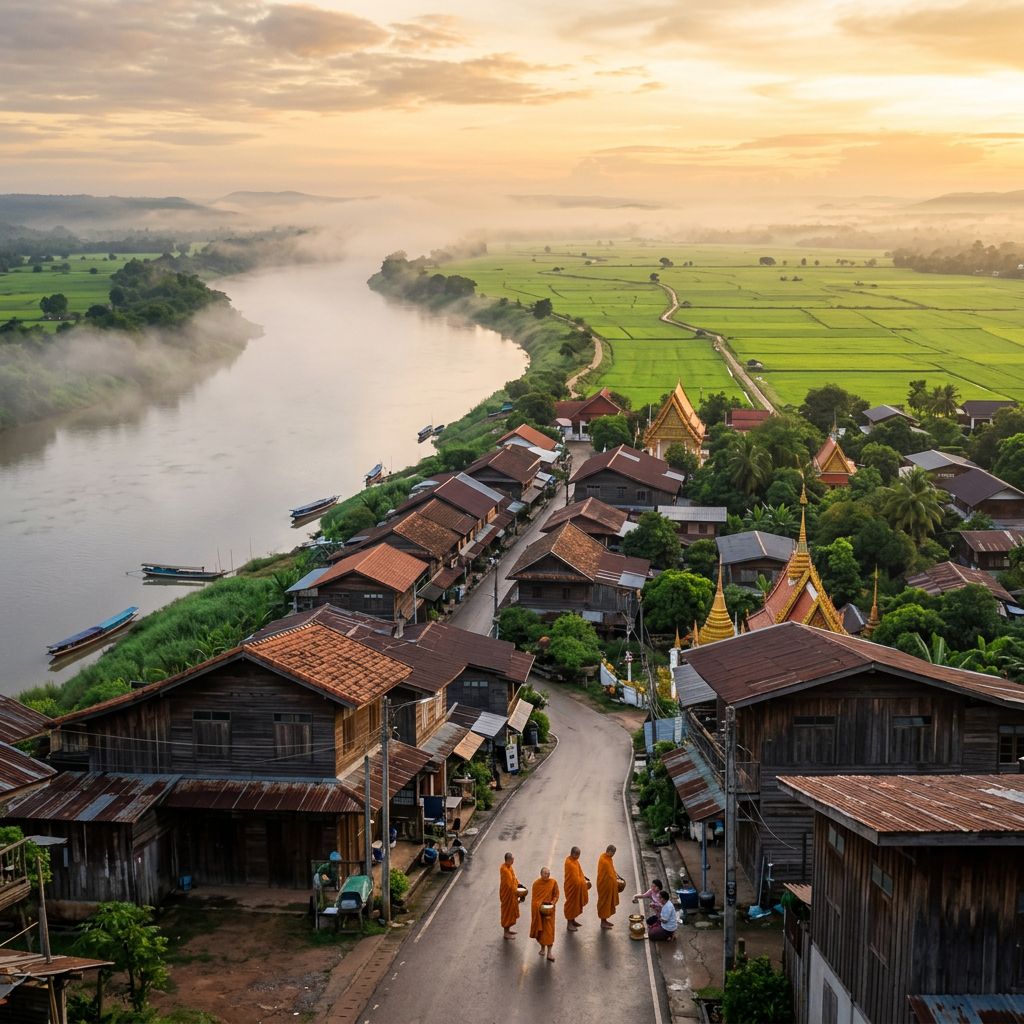
I have lived in Bangkok for six years. I know people who have been here longer and have never left the BTS line. There is nothing wrong with that. Bangkok has enough to keep you occupied for a decade. But if you are in Thailand for more than a few months, the tourist trail starts to feel like a loop. Bangkok, Chiang Mai, Phuket, islands, repeat.
The problem is not that these places are bad. They are popular for good reasons. The problem is that they represent maybe 5% of what Thailand actually is. The other 95% is cheaper, quieter, more culturally interesting, and almost entirely empty of foreign tourists. You will eat better, spend less, and have conversations with people who are genuinely surprised to see you there.
This guide is not a backpacker bucket list. It is a practical breakdown of places I have been to or that people I trust in Thailand have recommended, with honest notes on what to expect, how to get there, and whether the internet is good enough to work from.
Isaan is a third of Thailand's landmass. It shares borders with Laos and Cambodia. It is home to roughly 20 million people. And almost no foreign tourists go there. The region is flat rice paddies, Mekong River towns, ancient Khmer ruins, and some of the most flavorful food in the country. Som tam, larb, and sticky rice originated here. The versions you eat in Bangkok are toned-down imitations.
The major cities are Khon Kaen, Udon Thani, Nakhon Ratchasima (Korat), and Ubon Ratchathani. All have airports with cheap flights from Bangkok via AirAsia, Nok Air, or Thai Lion Air. Flights run ฿600-1,500 one-way booked ahead.
Khon Kaen is the most developed and has a small but real nomad-adjacent scene with cafes, a university, and decent internet. Udon Thani is the gateway to the Laos border crossing and has a significant expat community thanks to long-term retirees. Korat is the closest major Isaan city to Bangkok (2.5 hours by car) and serves as the region's economic hub.
Accommodation in Isaan is absurdly cheap. A clean one-bedroom apartment in Khon Kaen runs ฿3,000-6,000/month. Food at local markets costs ฿30-60 per meal. You can live comfortably on ฿15,000-20,000/month total ($420-560).
Nakhon Phanom sits on the Mekong River directly across from Laos. It hosted over 3 million visitors from January to October 2025, mostly Thai domestic tourists. The airport hit a 20-year passenger record. And yet almost no foreigners know it exists.
This is what people imagine Chiang Mai was like before the tourist wave. Riverside restaurants overlooking Laos, ancient temples, a walking street market that locals actually shop at, and food prices that make Bangkok feel like London. A meal at a mid-range restaurant overlooking the Mekong runs about ฿80-100. A three-star hotel averages ฿600/night.
The government has pledged ฿500 million for infrastructure upgrades between 2025 and 2027, including airport expansion. This place is on the rise. If you want to see it before the prices and crowds follow, go soon.
Lampang is 100km southeast of Chiang Mai and has most of what makes Chiang Mai appealing (temples, northern Thai culture, cafe scene, mountain proximity) without the elephant-pants-and-selfie-stick crowd. It is known as Thailand's horse cart city because it is one of the last places where horse-drawn carriages still operate as actual transport.
The temple scene here is excellent. Wat Phra That Lampang Luang is one of the most impressive Lanna-style temples in Thailand and you will often be the only foreigner there. The cafe and restaurant scene is surprisingly strong for a city most travelers skip entirely. Day trips to Chae Son National Park (hot springs) and the Thai Elephant Conservation Center are easy from here.
Lampang is reachable by bus from Chiang Mai (1.5-2 hours), by train on the Bangkok-Chiang Mai line, or by a short detour if you are driving the northern loop.
Kanchanaburi is the easiest off-the-path destination from Bangkok. Two to three hours by bus or van from the Southern Bus Terminal puts you in a riverside town surrounded by national parks, waterfalls, and World War II history. The Bridge over the River Kwai is here, along with war cemeteries and museums that give real weight to the region's past.
Beyond the history, Kanchanaburi province has Erawan National Park (seven-tiered turquoise waterfall, one of the most beautiful natural sites in Thailand), Sai Yok National Park, and floating raft house accommodation on the River Kwai. You can sleep on the river for ฿500-1,500/night.
The town itself has a backpacker-friendly strip along the river with guesthouses, restaurants, and bars. It is popular with domestic Thai tourists on weekends but sees relatively few international visitors compared to the major destinations. WiFi in town is workable for a weekend but this is not a long-term remote work base.
Sukhothai was the first capital of Siam (1238-1438). The historical park contains the ruins of the royal palace and dozens of temples spread across manicured grounds. You explore it by bicycle. It is one of Thailand's most important historical sites and on most days you will share it with a handful of Thai school groups and almost nobody else.
Ayutthaya gets the tourist traffic because it is an easy day trip from Bangkok. Sukhothai requires more effort to reach but rewards you with a far more atmospheric and less crowded experience. The ruins are better preserved and the surrounding countryside is flat, green, and peaceful.
Bangkok Airways and Nok Air fly to Sukhothai airport. Buses run from Bangkok's Mo Chit terminal (5-6 hours) and from Chiang Mai (5 hours). The new town has basic accommodation and restaurants. Rent a bicycle at the historical park entrance for ฿30-50/day.
The Mae Hong Son Loop is a circular route from Chiang Mai through Pai, Mae Hong Son town, and Mae Sariang, then back to Chiang Mai. It is roughly 600km of mountain roads, hairpin turns, hill tribe villages, hot springs, caves, and some of the most dramatic scenery in Thailand.
Pai is the most well-known stop and has a developed (some would say over-developed) backpacker scene. But Mae Hong Son town itself is genuinely remote. It sits in a valley surrounded by mountains, has Burmese-influenced temples, a morning mist that covers the lake, and almost no international tourism infrastructure. Mae Sariang on the southern leg is even quieter.
You need a motorbike or a car. The roads are well-maintained but have 1,864 curves on the northern route alone. If you are not confident on a motorbike, take the bus to Pai and base yourself there for day trips instead. Rent a 125cc automatic from Chiang Mai for ฿200-300/day. Make sure you have a Thai motorcycle license or an International Driving Permit. Police checkpoints are common on this route.
Koh Chang is Thailand's third-largest island. It sits in the eastern Gulf near the Cambodian border and is covered in dense tropical rainforest, waterfalls, and quiet beaches. It gets a fraction of the attention that Koh Samui or Phuket receive despite being just as beautiful and significantly cheaper.
The west coast has the main beaches (White Sand Beach, Lonely Beach, Bang Bao). Lonely Beach is the backpacker hub. The east coast is almost entirely undeveloped jungle. Mu Ko Chang National Marine Park protects the surrounding waters and smaller islands like Koh Kut and Koh Mak, both of which are even quieter.
Getting there: fly to Trat airport (1hr from Bangkok via Bangkok Airways) or take a bus/van from Ekkamai bus station (5-6 hours) then a 30-minute ferry. The bus-ferry combo costs ฿300-500 total. It also works as a stop on the overland route between Bangkok and Siem Reap (Cambodia).
While everyone goes to Krabi, Phi Phi, and Koh Lipe, the Trang islands remain almost untouched. Koh Mook has the famous Emerald Cave (a sea cave you swim through to reach a hidden lagoon), Koh Kradan has some of the clearest water in the Andaman Sea, and Koh Ngai is tiny and practically deserted in low season.
Trang province is south of Krabi on the Andaman coast. Fly from Bangkok to Trang airport (Nok Air, AirAsia, about 1.5 hours), then take a van to Pak Meng pier and a longtail boat to the islands. The whole transfer takes 2-3 hours from the airport.
Accommodation is basic. Bungalows on Koh Mook run ฿500-2,000/night. Food is fresh seafood at local prices. WiFi exists but do not come here expecting to work full days. This is a weekend or week-long escape, not a remote work base.
Chiang Khan is a small Mekong River town in Loei province that has become hugely popular with Thai domestic tourists for its wooden shophouse walking street and riverside sunsets. It is one of the most photogenic small towns in Thailand. Foreign visitors are still rare.
The main street runs parallel to the Mekong and is lined with converted wooden shophouses now serving as guesthouses, cafes, and small shops. Morning alms-giving to monks happens along the riverbank. The sunsets over Laos are genuinely special. Phu Thok mountain nearby has a cliff-edge wooden walkway that is worth the early morning hike.
Loei province also has Phu Kradueng National Park (a flat-topped mountain with a campsite on the summit) and some of the coolest temperatures in Thailand during the winter months. Fly to Loei from Don Mueang, then take a songthaew or rent a car for the one-hour drive to Chiang Khan.
Nan is a northern province near the Laos border that most travelers skip in favor of Chiang Mai and Chiang Rai. The town of Nan is small, quiet, and home to Wat Phumin, a 14th-century temple famous for its whispering lovers mural that has become one of the most reproduced images in Thai art. The surrounding mountains, national parks, and hill tribe villages make it one of the most beautiful and least visited provinces in the north.
The Bo Kluea salt wells are a 3-hour drive into the mountains. The terraced rice fields around Doi Phu Kha National Park are spectacular during the green season. The whole province has a sleepy, timeless quality that the major northern cities lost years ago.
Nok Air and AirAsia fly direct from Don Mueang to Nan airport. Buses run from Chiang Mai (6 hours) and Bangkok (10 hours overnight). Rent a car or motorbike to explore the province properly since public transport outside town is limited.
| Destination | From Bangkok | Cost | Time |
|---|---|---|---|
| Isaan (Khon Kaen) | Fly DMK or bus from Mo Chit | ฿600-1,500 fly / ฿300-400 bus | 1hr fly / 6hrs bus |
| Nakhon Phanom | Fly DMK | ฿800-1,800 | 1hr |
| Lampang | Fly to Chiang Mai + bus, or train direct | ฿500-2,000 | 1.5hrs from CM |
| Kanchanaburi | Bus/van from Southern Terminal | ฿100-200 | 2-3hrs |
| Sukhothai | Fly or bus from Mo Chit | ฿800-2,500 fly / ฿300-400 bus | 1hr fly / 5-6hrs bus |
| Mae Hong Son | From Chiang Mai by bike/bus | ฿200-300/day bike rental | 3-5 days loop |
| Koh Chang | Fly to Trat or bus from Ekkamai + ferry | ฿1,500-3,000 fly / ฿300-500 bus | 1hr fly / 5-6hrs bus |
| Trang Islands | Fly to Trang + boat | ฿1,000-2,500 fly + ฿400 boat | 1.5hrs fly + 2hrs transfer |
| Chiang Khan | Fly to Loei + drive | ฿800-1,800 fly + ฿200 transfer | 1hr fly + 1hr drive |
| Nan | Fly DMK or bus | ฿800-2,000 fly / ฿400-600 bus | 1hr fly / 10hrs bus |
Mobile data from AIS or DTAC covers almost all of Thailand with 4G, including these destinations. WiFi in accommodation ranges from good (Kanchanaburi, Lampang) to barely functional (Trang islands, rural Isaan). If you need to work, tether from your phone. Get a SIM with a solid data plan before leaving Bangkok. Read the Thailand SIM card guide for the best options.
Outside major cities, many places do not accept cards. ATMs exist in all provincial towns but can be sparse on islands and in rural areas. Carry cash. Use a Wise card to withdraw at the best rate and minimize the ฿220 foreign ATM fee where possible. Read the Thailand ATM fees guide.
Several of these destinations (Mae Hong Son, Koh Chang, Nan province, Lampang day trips) are best explored on a motorbike. If you do not have experience, start with a scooter in a quiet area before attempting mountain roads. Get a Thai motorcycle license to avoid fines and insurance issues.
All of these destinations are within Thailand, so your existing DTV visa or tourist exemption covers them. No border runs needed. Just go.
If you are riding motorbikes in rural Thailand, make sure your insurance covers it. SafetyWing covers motorbike riding up to 125cc. Check your policy before assuming you are covered.
The Ultimate Digital Nomad Guide to Southeast Asia covers Thailand in full. Neighborhoods, budgets, visas, banking, and everything else. 27 pages, real 2026 prices.
Get the Guide — $9.99 →