
 NOMADAGENT
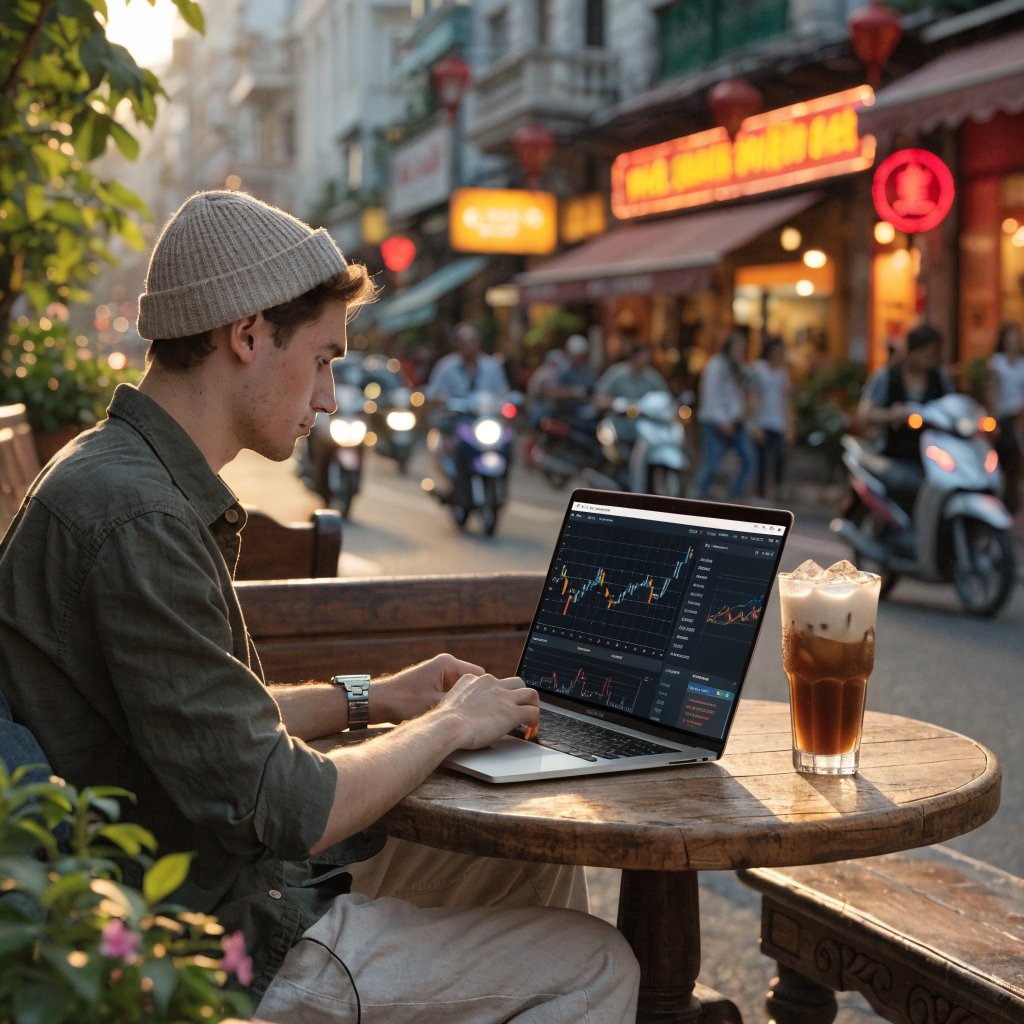
Vietnam has been one of the most popular crypto countries in the world for years — ranking 7th globally in adoption with over 20 million users — while simultaneously having zero legal framework for it. Crypto wasn't illegal, but it wasn't legal either. The State Bank of Vietnam banned it as a payment method in 2017, but trading as an investment existed in a grey zone.
That changed on January 1, 2026. Vietnam's Law on Digital Technology Industry officially recognizes crypto assets as legal property under civil law. This is one of the biggest regulatory shifts in Southeast Asian crypto, and it's happening right now. Most content online hasn't caught up yet.
Here's the timeline of what changed:
Vietnam's National Assembly passes the Law on Digital Technology Industry, officially recognizing crypto assets as legal property. The law categorizes digital assets into "virtual assets" and "crypto assets," excluding securities and digital fiat currencies.
The government launches a 5-year pilot program for digital asset markets under Resolution 05. This creates the framework for licensed exchanges to operate in Vietnam.
The law takes effect. Crypto assets now have legal protection — they can be owned, traded, and inherited like any other property. Smart contracts become legally enforceable. Courts can now handle crypto disputes.
The Ministry of Finance begins accepting license applications from Vietnamese enterprises to provide crypto trading services.
The Ministry of Finance publishes draft tax regulations for public comment — proposing a 0.1% transaction tax on individuals and VAT exemption on crypto transfers.
The 0.1% personal income tax on crypto transactions is expected to take effect.
This is genuinely historic. For years, Vietnam's crypto market operated in legal limbo — massive adoption but zero legal protection. Investors had no recourse if an exchange scammed them, no way to enforce smart contracts in court, and no clarity on taxes. That era is over.
Personal income tax per transaction (from July 1, 2026)
On gross transaction value | Licensed platforms only | Same rate as stock trading
The draft tax circular (published February 6, 2026) proposes the following framework:
| Who | Tax Rate | Details |
|---|---|---|
| Individual investors (resident or foreign) | 0.1% | On gross transaction value per trade, regardless of profit or loss |
| Vietnamese corporations | 20% CIT | Corporate income tax on profits (sale price minus cost and expenses) |
| Foreign corporations via Vietnamese platforms | 0.1% | Transaction levy on transfer values |
| VAT on crypto transfers | 0% (Exempt) | Crypto transfers are not subject to VAT |
The 0.1% rate matches Vietnam's existing stock transaction tax. It's a turnover-based levy — you pay on the gross value of every sale, not on your profit. Sell $10,000 of BTC, you pay $10 regardless of whether you made or lost money.
Vietnam is building its licensed exchange infrastructure from scratch. Here's what the pilot program looks like:
All crypto trading must go through licensed Vietnamese platforms. The pilot program requires exchanges to meet strict requirements including a minimum charter capital of VND 10 trillion (~$380 million USD) and at least 35% ownership by two financial institutions.
Foreign ownership is capped at 49%. This means global exchanges can't just open a Vietnamese branch like Binance did in Thailand (Gulf Binance) or Indonesia (Tokocrypto). Vietnamese financial institutions must hold majority control.
All trading must be conducted in Vietnamese Dong (VND). No USD pairs, no stablecoin pairs — everything settles in VND through licensed Vietnamese banks.
Foreign investors can open accounts at licensed exchanges, but must also open VND payment accounts with licensed Vietnamese banks for all crypto-related transactions.
As of March 2026, no exchanges have been licensed yet — the application process just started in January. This means there are currently no legal platforms to trade crypto on in Vietnam under the new framework. The existing grey-market exchanges that Vietnamese traders have been using (including offshore platforms) are technically operating outside the new legal framework.
This is a significant difference from Thailand (where Bitkub has been operating for years) and Indonesia (which already has 29 licensed exchanges). Vietnam is starting from zero on the infrastructure side. The $380 million minimum capital requirement also means only major financial players will be able to enter — this won't be a market with dozens of small exchanges.
Under the new framework, foreign crypto investors must open a VND payment account at a licensed Vietnamese bank. Here's the reality of banking in Vietnam as a nomad:
Vietnamese banks are more foreigner-friendly than you might expect, especially in HCMC and Hanoi. The main banks are Vietcombank, BIDV, Techcombank, and VPBank.
What you need: Passport, visa (e-visa works), Vietnamese phone number, proof of address (hotel booking or rental contract), and sometimes a letter of introduction from your employer or landlord.
Reality check: Some branches will open an account for tourists, others won't. Techcombank and VPBank tend to be the most foreigner-friendly. Having a longer-term visa (business visa or temporary residence card) makes it significantly easier.
This is where Vietnam gets tricky in 2026. Since no licensed exchanges are operational yet, the on/off ramp situation is in transition:
There are no licensed Vietnamese crypto exchanges yet. Many Vietnamese traders still use offshore platforms (Binance, OKX, etc.) through VPNs, or P2P trading through Telegram and local networks. This is technically operating outside the new legal framework.
For nomads: The safest approach right now is to hold your crypto on established international platforms and use Wise or international bank transfers for your VND spending needs. Don't try to trade crypto locally in Vietnam until licensed exchanges are operational.
Once licensed exchanges launch: Wise/bank transfer to Vietnamese bank account > deposit VND to licensed exchange > buy/sell crypto. The 0.1% tax will be deducted automatically by the exchange.
Wise gives you the real mid-market exchange rate for VND with no hidden markup. The Wise card works at Vietnamese ATMs and for daily spending.
Get Wise Card →Vietnam does not currently have a dedicated digital nomad visa. However, the existing options work well for nomads:
Duration: Up to 90 days, single or multiple entry.
Cost: $25 (single entry) or $50 (multiple entry).
Application: 100% online at evisa.gov.vn. Approved in 3-7 business days.
Available to: Citizens of all countries.
The move: Get a 90-day multiple-entry e-visa. When it expires, do a quick visa run to Thailand, Cambodia, or Laos and re-enter on a new e-visa. Many nomads do this cycle indefinitely.
Citizens of dozens of countries can enter Vietnam visa-free for 14-45 days depending on nationality. Useful for scouting trips but too short for establishing a base.
For freelancers or those with Vietnamese business contacts. Requires a local sponsor. Can be issued for up to 90 days. More paperwork than the e-visa but useful if you have a business connection in Vietnam.
Vietnam's Tourism Advisory Board has proposed a 10-year Golden Visa and a 5-year Talent Visa for skilled professionals. These are expected to be piloted in Hanoi, HCMC, Da Nang, and Phu Quoc. Details are still being finalized. If you're a high-net-worth crypto investor, the Golden Visa could be very interesting when it launches.
Vietnam considers you a tax resident if you spend 183 days or more in the country during a calendar year, or if you have a permanent residence in Vietnam.
Key point for nomads: Vietnam's tax system for foreigners working remotely is still evolving under the new regulations. Currently, income earned from foreign sources by non-residents is generally not taxed in Vietnam. If you're on a tourist e-visa, working remotely for a foreign company, and your income never touches a Vietnamese bank account, your tax exposure in Vietnam is minimal.
However, once you start trading crypto on a Vietnamese licensed exchange (when they launch), the 0.1% transaction tax applies to everyone — resident and non-resident alike. It's collected at source by the exchange.
| Factor | 🇻🇳 Vietnam | 🇹🇭 Thailand | 🇮🇩 Indonesia |
|---|---|---|---|
| Crypto legal status | Legal (Jan 2026) | Legal (2018) | Legal (regulated) |
| Transaction tax | 0.1% (from Jul 2026) | 0% (until 2029) | 0.21% domestic |
| Licensed exchanges | None yet (launching 2026) | 7+ (Bitkub, Binance TH) | 29 (Indodax, Tokocrypto) |
| VAT on crypto | Exempt | Exempt | Exempt on transfers |
| Nomad visa | No (90-day e-visa) | DTV (180 days) | E33G (1-5 years) |
| Cost of living | $700-1,400/mo | $1,000-2,500/mo | $1,000-2,500/mo |
| Internet quality | Excellent | Very good | Variable |
| Crypto adoption rank | 7th globally | ~20th | ~10th |
The honest take: For pure crypto trading optimization, Thailand wins right now with 0% tax and established exchange infrastructure. Vietnam's advantage is that it's significantly cheaper to live in, has excellent internet, incredible food, and a massive local crypto community. Once licensed exchanges launch and the infrastructure matures, Vietnam could become very competitive — especially if the 0.1% rate holds and Thailand's 0% window closes in 2029.
Read our other crypto country guides: Thailand | Indonesia/Bali
The financial capital and crypto hub of Vietnam. HCMC has the largest expat community, the most coworking spaces, and the fastest pace. District 1, District 2 (Thu Duc/Thao Dien), and District 7 are the main nomad areas. If you want to network with local crypto traders and builders, this is where they are.
Best for: Active traders, networking, crypto community access, nightlife.
The Goldilocks city. Beach lifestyle with city infrastructure. Da Nang has grown massively as a nomad hub — great coworking spaces, solid internet, beautiful beaches, and a fraction of HCMC's chaos. My Khe beach area and the An Thuong neighborhood are the main nomad zones.
Best for: Work-life balance, beach access, lower costs, growing nomad community.
The cultural capital. Older, more traditional, with incredible street food and a distinct energy. The Old Quarter and Tay Ho (West Lake) are the main expat areas. Hanoi has fewer nomads than HCMC but a dedicated community. Cooler weather (it actually gets cold in winter), which is a welcome change if you've been in tropical Southeast Asia for too long.
Best for: Culture seekers, food lovers, those who want a different SE Asian experience.
The charming ancient town. Beautiful architecture, lantern-lit streets, tailors on every corner. Much smaller and quieter than the big cities. Growing coworking scene but still limited. Best as a 1-2 month base rather than a long-term home.
Best for: Short-term stays, relaxation, cultural immersion.
Vietnam is one of the cheapest countries in Southeast Asia for nomads. Here's what to expect:
| Category | Budget ($700-1,000/mo) | Comfortable ($1,000-1,400/mo) |
|---|---|---|
| Rent (1BR apartment) | $200-350 | $400-700 |
| Food | $150-250 | $250-400 |
| Scooter rental | $40-60 | $40-60 |
| Coworking | $50-100 | $80-150 |
| Internet (home) | $10-20 | $15-25 |
| SIM card/data | $5-10 | $5-10 |
| Health insurance | $45-80 | $80-150 |
| Entertainment | $80-150 | $150-300 |
| Total | $580-1,020 | $1,020-1,795 |
Vietnamese street food is legendary and absurdly cheap. A bowl of pho costs $1.50-2.50. A banh mi sandwich is $0.75-1.50. A ca phe sua da (Vietnamese iced coffee) is $0.50-1. You can eat three incredible meals a day for under $8. Vietnam's internet is surprisingly fast — Viettel and VNPT fiber connections deliver 50-100+ Mbps for $10-20/month. Vietnam consistently ranks above Thailand and Indonesia for average internet speeds.
The new law introduces civil and criminal penalties for trading on unlicensed platforms after the grace period ends. Vietnam is taking enforcement seriously — they want to get off the FATF grey list, which means cracking down on unregulated crypto activity.
Using crypto to pay for goods and services remains banned in Vietnam. The State Bank's 2017 prohibition is still in effect. The new law legalizes crypto as an investment asset, not as money.
Vietnam takes overstays seriously. Fines, deportation, and potential entry bans. Set calendar reminders, plan your visa runs in advance, and don't push the boundaries.
Vietnamese hospitals can handle most issues, but quality varies. Get proper travel/health insurance. Traffic accidents (especially scooter accidents) are the #1 reason nomads end up in hospitals across Vietnam.
Different country, different culture, different rules. The language barrier is higher (fewer people speak English outside tourist areas), the bureaucracy works differently, and the crypto infrastructure is years behind Thailand and Indonesia. Come with realistic expectations and you'll love it.
Apply for a 90-day multiple-entry e-visa at evisa.gov.vn ($50). Set up a Wise account. Get health insurance. Download Grab (ride-hailing), Zalo (Vietnamese messaging app — you'll need it), and Google Maps offline for Vietnam.
Fly into HCMC (Tan Son Nhat) or Da Nang. Get a Vietnamese SIM card (Viettel or Mobifone — available at the airport for $3-5). Use Grab for transport. Try 2-3 neighborhoods. Eat pho for every meal.
Find a monthly rental (Facebook groups: "Saigon Rentals," "Da Nang Expats," etc). Try to open a bank account (Techcombank or VPBank). Join a coworking space. Establish your routine.
Keep your crypto on established international platforms for now. Monitor Vietnam's exchange licensing progress. When licensed exchanges launch, you'll be able to trade locally with the 0.1% tax. Until then, use Vietnam as your affordable, high-quality-of-life base while managing crypto through platforms in other jurisdictions.
Vietnam is one of four countries covered in our comprehensive paid guide. Visas, apartments, banking, cost of living, and everything else you need to make the move.
Get the Full Guide — $9.99 →